User Experience for the PayPal Application Using the User Experience Questionnaire (UEQ) Method: A Case Study in Pagar Alam
DOI:
https://doi.org/10.31848/jesii.v4i1.4413Keywords:
evaluation, user experience, PayPal, Digital Wallet, user experience questionnaireAbstract
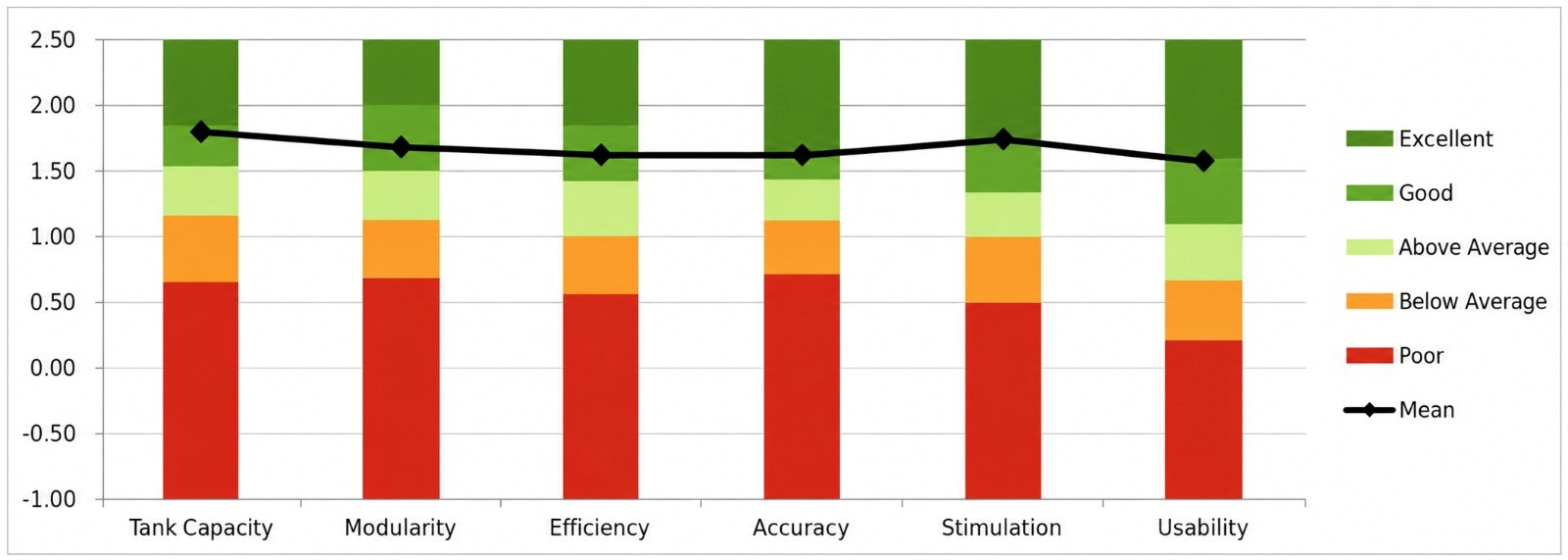
Digital transformation and financial inclusion have driven the increased use of digital wallets and online transactions, PayPal as one of the largest digital payment services. However, the user responses to the quality of PayPal's systems and services are still diverse. This study aims to evaluate the user experience of the PayPal application version 8 using the User Experience Questionnaire (UEQ) method. The results showed that PayPal scored very well in attractiveness with a score of 1.82, efficiency (1.67), dependability (1.66), stimulation (1.78), and novelty (1.61), and it placed PayPal above 75% of the similar apps. Even though clarity, with a score of 1.72, was rated "Above Average", it indicated that 25% of other apps were performing better. As a result, this aspect still needed attention. Overall, PayPal offered a positive user experience particularly in attractiveness and efficiency, but improvements to clarity were still needed. In addition, further evaluation is still needed because the scope of this research only covered the city of Pagaralam.
References
A. T. Esawe, “Understanding mobile e-wallet consumers’ intentions and user behavior,” Spanish Journal of Marketing - ESIC, vol. 26, no. 3, pp. 363–384, Dec. 2022, doi: 10.1108/SJME-05-2022-0105.
J. Al Qardh, J. Tarantang, A. Awwaliyah, M. Astuti, and M. Munawaroh, “60 IAIN Palangka Raya PERKEMBANGAN SISTEM PEMBAYARAN DIGITAL PADA ERA REVOLUSI INDUSTRI 4.0 DI INDONESIA.”
D. Oleh, “APLIKASI E-COMMERCE DENGAN MENGGUNAKAN METODE PAYPAL STUDI KASUS DISTRO NEVERSUCK BANDUNG,” 2019.
A. Safa Nur Nabila, F. Tri Oktavianti, and N. Lifiana Putri, “Using Paypal As E-Payment In The International Payment System,” ASIAN Economic and Business Development, vol. 4, no. 1, pp. 14–19, Jun. 2022, doi: 10.54204/AEBD/Vol4No1July2022003.
S. Hidayatuloh, R. H. Kusumaningtyas, dan Y. Aziati, “Analisis Pengaruh User Experience Terhadap Kepuasan Pengguna Mobile Application E-Commerce Shopee Menggunakan Model Delone & McLean,” Applied Information Systems and Management (AISM), vol. 2, no. 2, pp. 77-80, 2019.
Ciputra, H.C.S., & Farisi, A. (2023). Analisis Kualitas Pengalaman Pengguna Website Payoprint Menggunakan Metode User Experience Questionnaire (UEQ). Jurnal MDP, vol. 2, no. 1, pp. 147-159. doi: 10.35957/mdp-sc.v2i1.4354.
T. Siya et al., “Rahayu and Aransyah-Analysis of Qris User Experience using The User Experience Questionnaire (UEQ) Method ANALYSIS OF QRIS USER EXPERIENCE USING THE USER EXPERIENCE QUESTIONNAIRE (UEQ) METHOD.”
R. A. Agustina and A. Gustalika, “Bulletin of Information Technology (BIT) Evaluasi User Experience Pada Aplikasi Linkaja Menggunakan Metode User Experience Questionnaire (UEQ),” vol. 3, no. 4, pp. 323–331, 2022, doi: 10.47065/bit.v3i1.
F. D. N. Annisa, J. N. U. Jaya, and S. Surmiati, “Evaluasi Pengalaman Pengguna Pada Aplikasi E-Wallet OVO dan GOPAY Dengan Metode User Experience Questionnaire,” Journal of Information System Research (JOSH), vol. 3, no. 3, pp. 242–251, Apr. 2022, doi: 10.47065/josh.v3i3.1527.
Y. Wijayanti, S. Suyoto, and A. T. Hidayat, “Evaluasi Pengalaman Pengguna Pada Aplikasi Seluler Visiting Jogja Menggunakan Metode User Experience Questionnaire (UEQ),” Jurnal Janitra Informatika dan Sistem Informasi, vol. 3, no. 1, pp. 10–17, Apr. 2023, doi: 10.25008/janitra.v3i1.169.
Y. Sari, N. Novitasari, and H. Pratiwi, “Evaluation of lambung mangkurat university student academic portal using user experience questionnaire (UEQ),” ILKOM Jurnal Ilmiah, vol. 13, no. 1, pp. 45–50, Apr. 2021, doi: 10.33096/ilkom.v13i1.787.45-50.
Amin, N. F., Garancang, S., & Abunawas, K. (2023). Konsep umum populasi dan sampel dalam penelitian. Jurnal Pilar: Jurnal Kajian Islam Kontemporer, 14(1), 15-29. Universitas Muhammadiyah Makassar, Indonesia.
Riyanto Slamet, Hatmawan Andhita Aglis. 2020. Metode Riset Penelitian Kuantitatif. Yogyakarta: CV BUDI. UTAMA.
I. Lenaini and R. Artikel, “TEKNIK PENGAMBILAN SAMPEL PURPOSIVE DAN SNOWBALL SAMPLING INFO ARTIKEL ABSTRAK,” vol. 6, no. 1, pp. 33–39, 2021, doi: 10.31764/historis.vXiY.4075.
F. D. N. Annisa, J. N. U. Jaya, and S. Surmiati, “Evaluasi Pengalaman Pengguna Pada Aplikasi E-Wallet OVO dan GOPAY Dengan Metode User Experience Questionnaire,” Journal of Information System Research (JOSH), vol. 3, no. 3, pp. 242–251, Apr. 2022, doi: 10.47065/josh.v3i3.1527.
M. Schrepp, “User Experience Questionnaire Handbook,” 2023.
Y. Wijayanti, S. Suyoto, and A. T. Hidayat, “Evaluasi Pengalaman Pengguna Pada Aplikasi Seluler Visiting Jogja Menggunakan Metode User Experience Questionnaire (UEQ),” Jurnal Janitra Informatika dan Sistem Informasi, vol. 3, no. 1, pp. 10–17, Apr. 2023, doi: 10.25008/janitra.v3i1.169.
Downloads
Published
How to Cite
Issue
Section
License
Copyright (c) 2026 Imam Zada Ainullah, Muhammad Husni Syahbani, Dwi Rosa Indah

This work is licensed under a Creative Commons Attribution-ShareAlike 4.0 International License.
Authors who publish in JESII: Journal Elektronik Sistem InformasI agree to the following terms:
Authors retain copyright and grant the journal right of first publication with the work simultaneously licensed under a Attribution-ShareAlike 4.0 International (CC BY-SA 4.0) License that allows others to share the work with an acknowledgment of the work's authorship and initial publication in this journal.
Authors are able to enter into separate, additional contractual arrangements for the non-exclusive distribution of the journal's published version of the work (e.g., post it to an institutional repository or publish it in a book), with an acknowledgment of its initial publication in this journal.
Authors are permitted and encouraged to post their work online (e.g., in institutional repositories or on their website) prior to and during the submission process, as it can lead to productive exchanges, as well as earlier and greater citation of published work (See The Effect of Open Access).